
 Last update date:


Quick Summary :-
In the current age, where businesses are evolving rapidly, outsourcing has become strategic guidance for companies. It helps them to hire skilled teams and experts who can help businesses overcome the complexities of the dynamic global market. Thus, in this blog, we will discuss recent outsourcing stats on worldwide IT outsourcing, and explore the IT trends that are reshaping the sector.The overall IT outsourcing industry has experienced rapid development in recent years. Nowadays, companies are eager to stay ahead of the market, therefore they focus more on IT outsourcing. With USD 1,149.24 billion at an annual growth rate (CAGR) of 8.2%, the global IT outsourcing market will reach its mark in 2032.
Consequently, small and medium businesses and big enterprises are searching for IT outsourcing services to hire highly skilled professionals. They have realized that hiring specialists outside the organization for software development and technical support, helps them to stay competitive and quickly respond to changes in the market.
Now, let us explore the Global IT outsourcing statistics, explore insights, and trends in depth.
60+ Global IT Outsourcing Statistics Shaping Tomorrow’s Landscape
With the increasing complexity of IT tasks, the demand for outsourcing services continues to rise. Here we will discuss the Top 60+ IT outsourcing statistics that encapsulate the industry’s growth and significance.
1. Over 70% of organizations expect AI and automation to be integrated into outsourcing by 2026, reflecting the growing demand for intelligent, scalable, and efficient IT services.
2. More than 65% of enterprises report increased operational efficiency through AI-powered outsourcing, including automated testing, monitoring, and incident management.
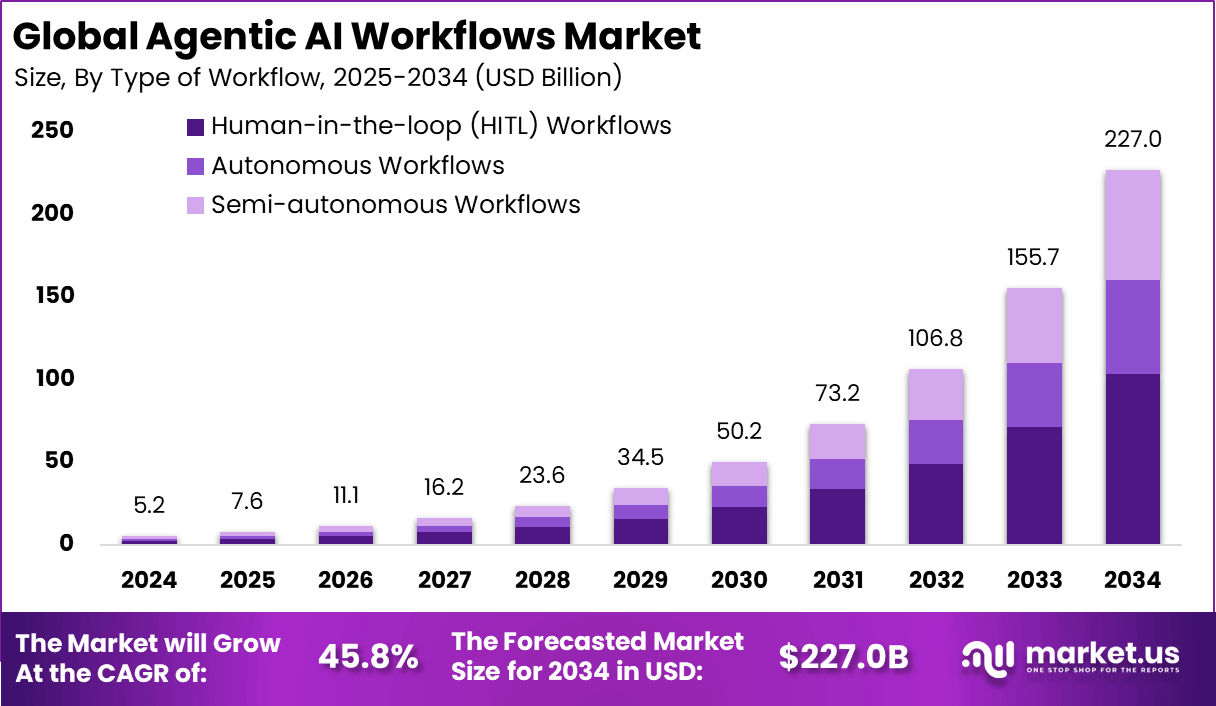
3. The global agentic AI workflows market is projected to grow from ~$11B in 2026 to $227B by 2034, at a CAGR of 45.8%, driven by autonomous AI, HITL systems, and advanced automation.
4. Nearly 80% of CIOs consider automation-led outsourcing essential for scaling digital operations, particularly in cloud-native, DevOps, and cybersecurity environments.
5. By 2028, AI regulations may raise demand for human-assisted services by 30%, reshaping outsourcing workforce models and delivery strategies.
6. Around 60% of companies are expanding AI-driven outsourcing through existing vendors, prioritizing long-term partnerships over frequent vendor changes.
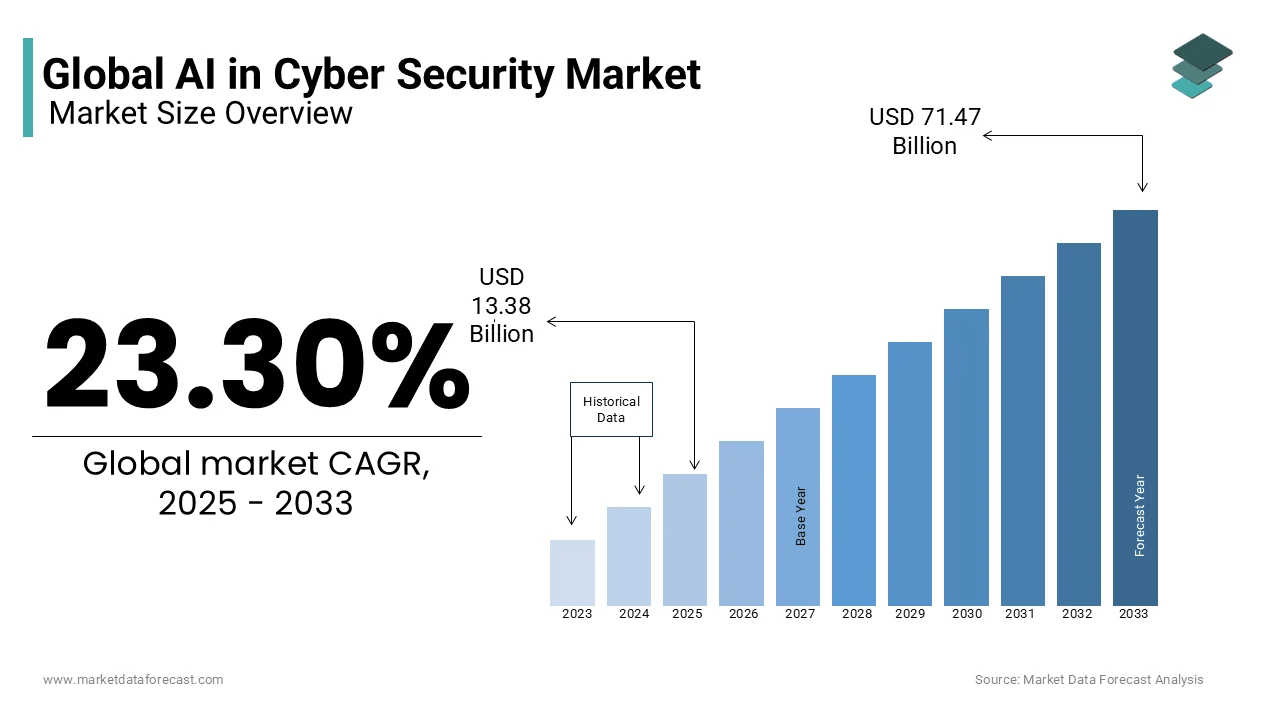
7. AI in cybersecurity market is projected to grow from ~$20B in 2026 to $71.47B by 2033, at a CAGR of 23.3%, driven by rising cyber threats and AI-powered security solutions.
8. By 2030, 25% of IT tasks will be automated by AI, reducing reliance on manual outsourcing and improving efficiency.
9. Data analytics outsourcing market will grow by B by 2030, driven by increasing demand for machine learning, big data insights, and faster data-driven decision-making.
10. Around 50% of companies will rehire staff by 2027 after AI-led cuts, showing limits of full outsourcing automation.
11. The global BPO outsourcing market is forecast to hit USD 367 billion by 2026, growing steadily at a 9.4% CAGR through 2030.
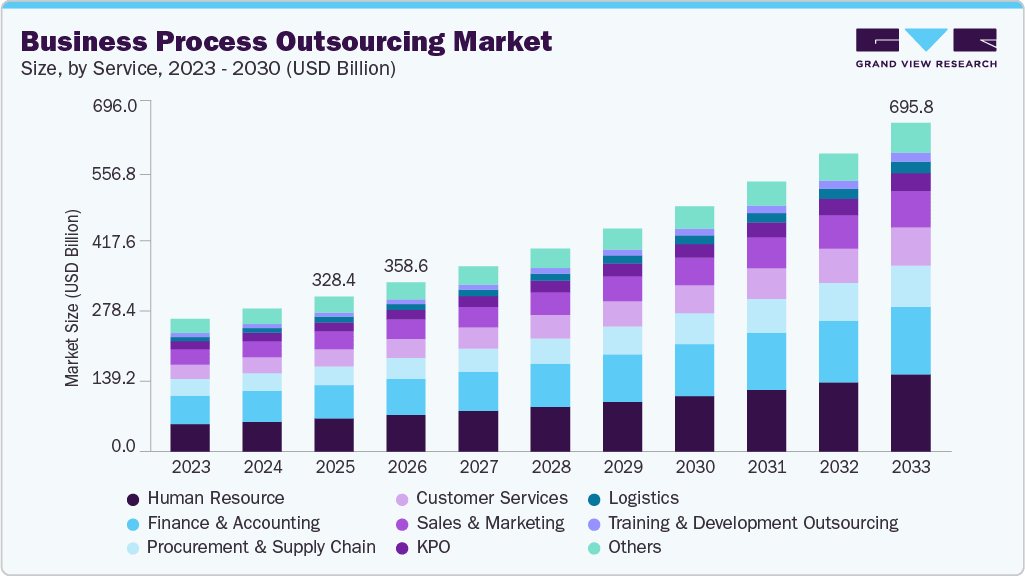
This development is driven by digital transformation, cost optimization focus, and the increasing demand for specialized services. As companies are focusing more on efficiency and agility, BPO will be a strategic imperative. This would enable them to efficiently leverage external expertise and resources for long-term success and competitive advantage.
12. Global IT outsourcing budgets are estimated at 16–18% in 2026 and are projected to exceed 20% by 2030.
This upward trend reflects the growing dependence on outsourcing to support AI adoption, cloud transformation, and digital scalability. Organizations are increasingly leveraging outsourcing to enhance efficiency, reduce operational costs, and accelerate innovation in a competitive digital landscape.
13. The Gig economy accounts for over 40% of the U.S. workforce in 2026 and is expected to approach 50% by 2030.
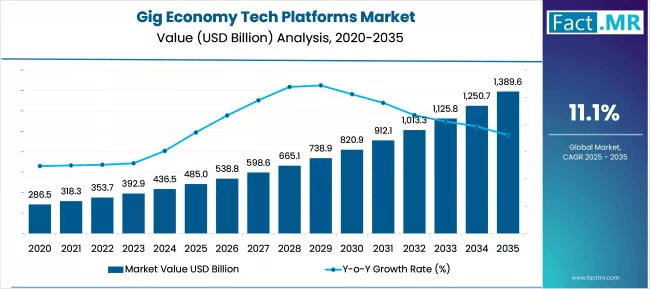
This expansion is driven by the rising demand for flexible, remote, and skill-based work models. Outsourcing and digital platforms continue to enable access to global talent, making gig-based employment a key pillar of the modern workforce.
14. Accenture, TCS, and Infosys remain leading outsourcing providers in 2026 and are expected to dominate through 2030.
These companies are at the forefront of AI-driven outsourcing, cloud services, and digital transformation, delivering scalable and innovative solutions that help enterprises stay competitive in a rapidly evolving market.
15. Approximately 200,000–300,000 jobs are outsourced annually from the United States in 2026, with a growing shift toward high-skill roles by 2030.
According to the report, about 300,000 jobs are outsourced from the USA annually. These IT outsourcing statistics demonstrate the powerful effect of outsourcing on the American labor force and economy. Although outsourcing can result in cost savings and productivity for businesses, it also raises issues of job loss and wage stagnation in some industries.
16. Cloud computing supports 92–94% of outsourcing operations in 2026 and is expected to exceed 95% adoption by 2030.
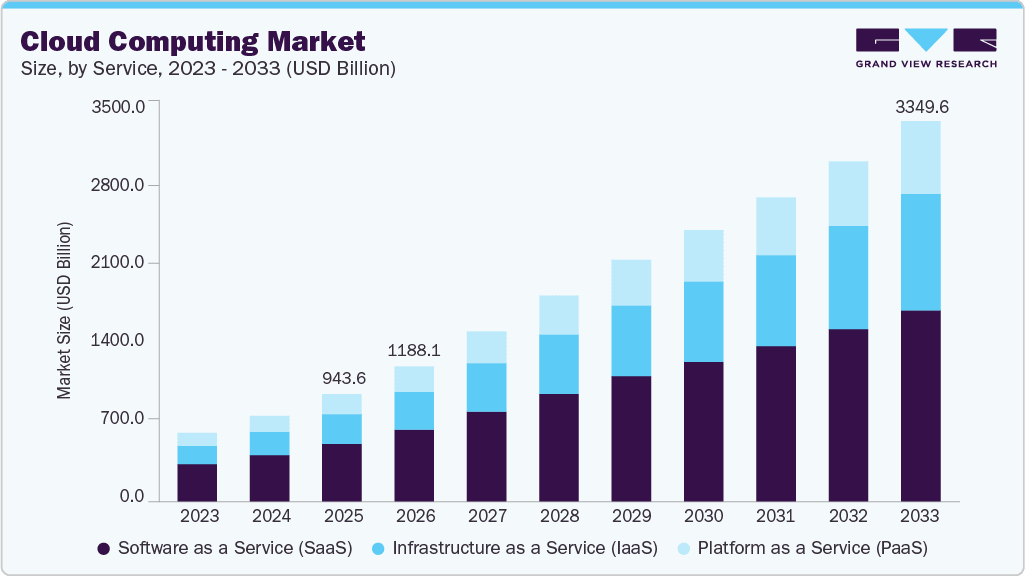
Cloud technology continues to power outsourcing by enabling scalability, real-time collaboration, and integration with advanced technologies like AI and automation, helping organizations improve efficiency and performance.
17. G2000 companies (92%) have contracts for business process outsourcing.
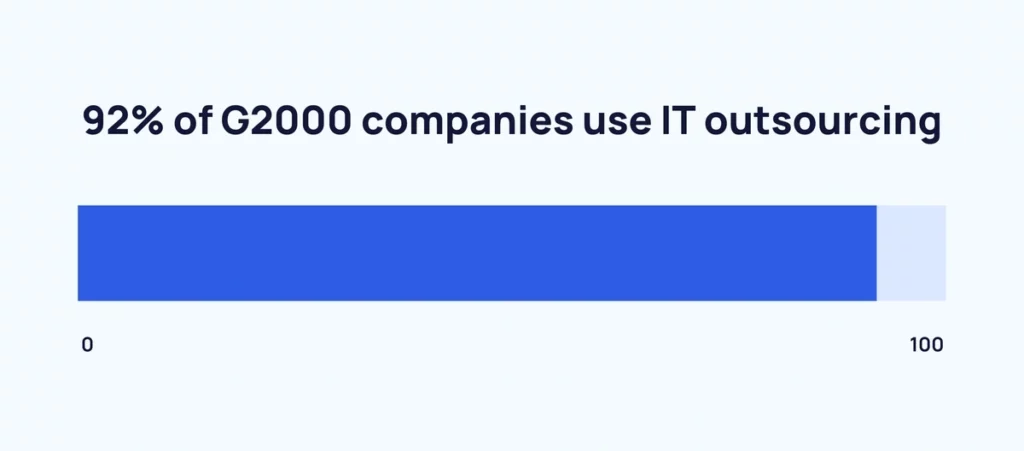
This figure highlights the utilization of outsourcing strategies by the top players who want to improve efficiency, concentrate on core competencies, and foster innovation. G2000 companies also benefited from specialization, scalability, and cost optimization when they outsourced non-core IT functions like customer support, finance, and human resources. It allowed them to adapt to market dynamics and sustain competitive advantages in the business environment.
18. 78% of businesses have good relations with their outsourcing partners.
The IT outsourcing statistics depict the fact that companies maintain strong partnerships with their contractors, suppliers, and clients. Strong partnerships deliver innovation, agility, and responsiveness, allowing companies to adapt and meet the challenges of the market.
19. Approximately 35–40% of small businesses outsource their IT needs, including services such as cloud management, cybersecurity, and technical support.
Outsourcing Landscape: General IT Outsourcing Statistics
Now, let’s explore some general worth-knowing IT outsourcing stats expanding the picture of IT outsourcing in the market.
20. 70% of the users confirmed cost reduction as the main objective of outsourcing.
Companies outsource their operations with the desire to make more efficient savings on labor, infrastructure, and overhead costs. Its primary emphasis is on cost-saving in the modern international market, which interests competitiveness and profitability.
21. Globally, around 80% of companies have accepted to outsourcing software development requirements.
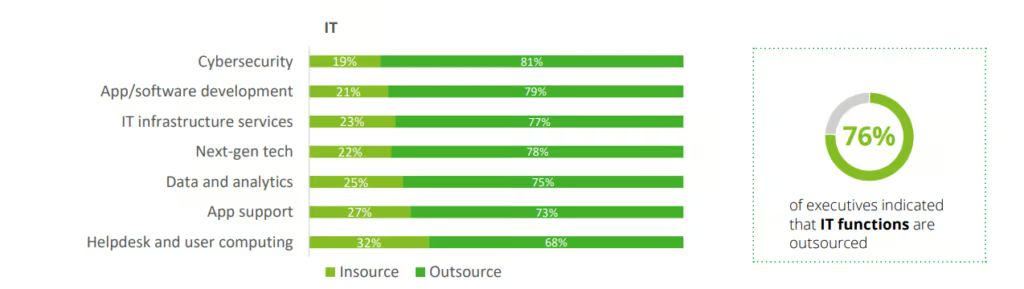
As per a survey conducted by Deloitte, a major 76% of surveyed executives adopted IT outsourcing to accelerate their organizational processes. Next-gen tech implementation, cybersecurity, setting up IT ecosystems, and app and custom software development are some of the major tasks outsourced to the service providers.
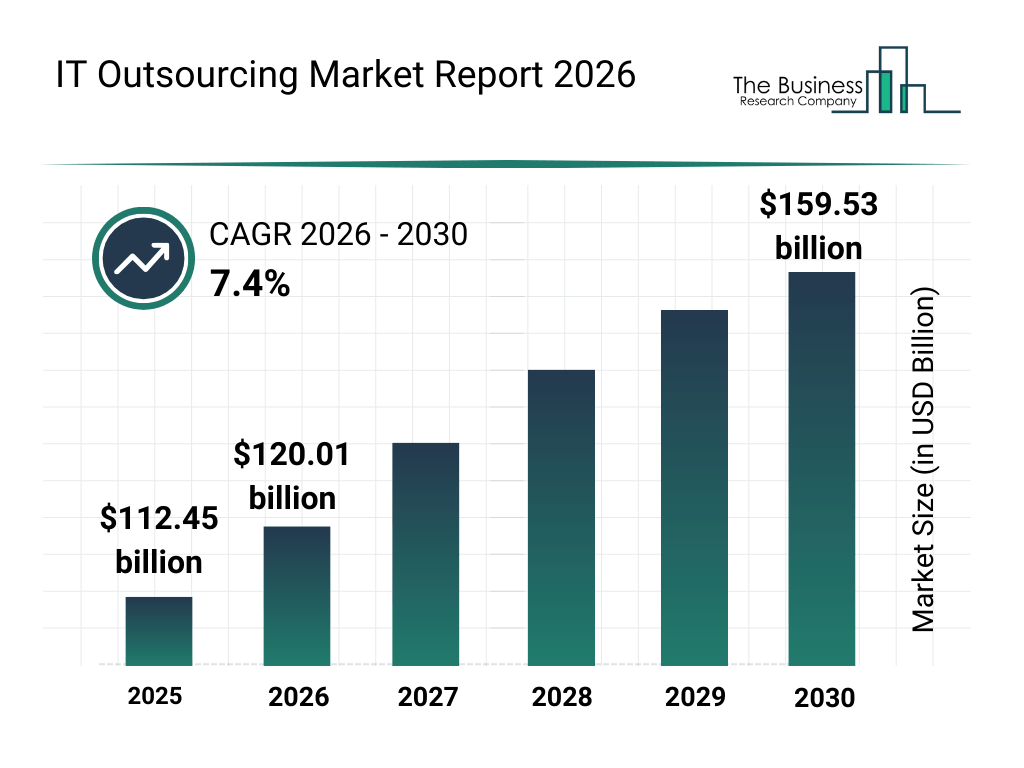
22. The global outsourcing market is expected to exceed $120 billion by 2026.
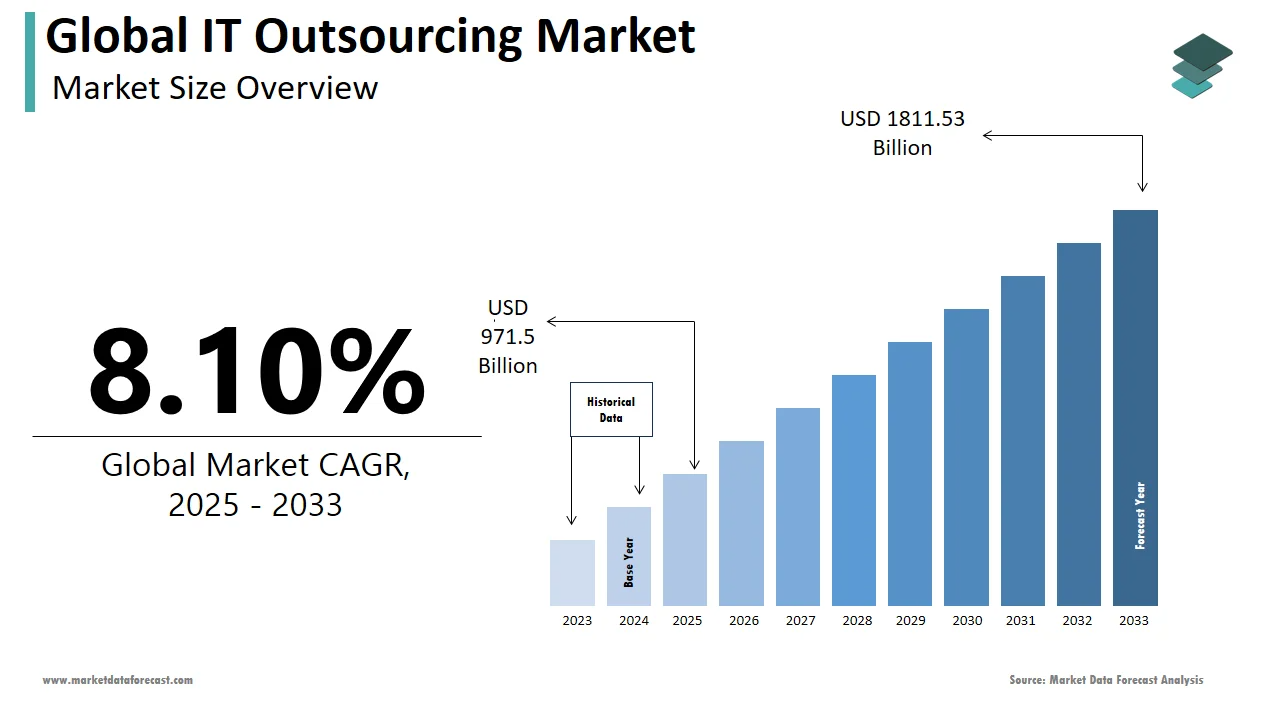
Outsourcing continues to grow as a strategic approach for improving efficiency, reducing costs, and accessing skilled talent, helping businesses stay competitive and scalable.
23. Around 70–80% of small businesses are increasing their BPO investment by 2026.
Small businesses are leveraging outsourcing to streamline operations, enhance digital presence, and support faster, sustainable growth.
24. The business process outsourcing will get to $544.8 billion by 2032.
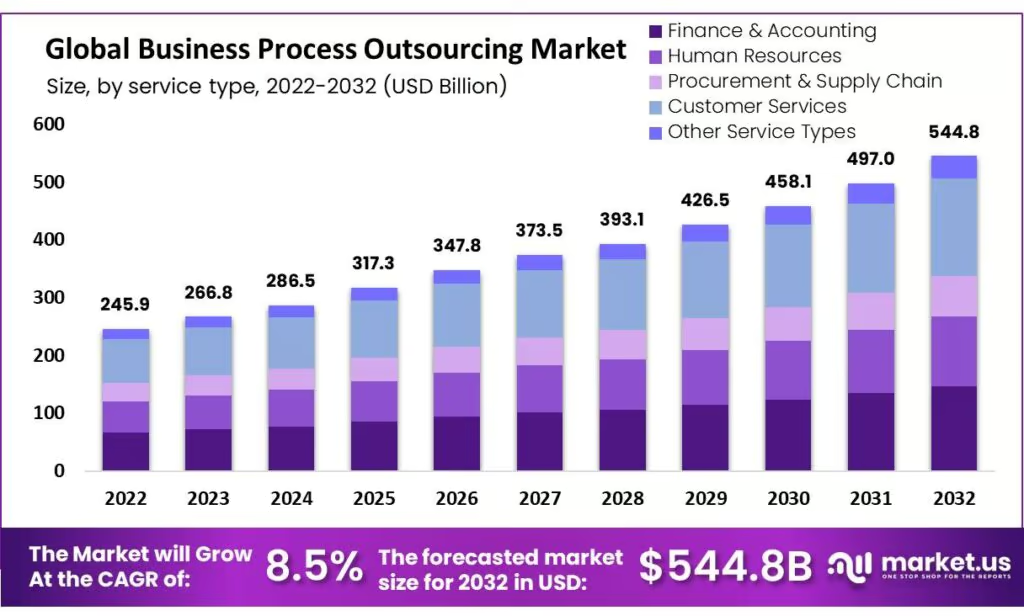
Delegating non-key tasks to outside service providers enables companies to concentrate on fundamental competencies and innovation. With the growing reach of BPO, outsourcing remains a strategic component of the business growth plan to drive growth and innovation.
25. Banks outsource at least 40% of their help desk jobs.
Outsourcing help desk services to third-party providers enables banks to prioritize their main processes. This inclination speaks to the industry’s commitment to the use of outsourcing as a main pillar of their business strategies.
26. 66% of large companies leverage outsourcing more compared to small businesses.
These IT outsourcing stats suggest that larger companies outsource their IT services more than small businesses to meet their broad range of digital requirements. It helps them with scalability, specialized resource availability, and cost efficiency. Thus, outsourcing is an appealing choice for process simplification, innovation, and competitiveness.
27. 60% of B2B brands are getting their marketing assistance from outside resources.
Outsourcing marketing work has helped B2B brands carry out their operations smoothly, cut costs, and meet the demands of the dynamic market. Tasks such as content creation and management, designing marketing and sales campaigns, expert consulting, lead generation, customer acquisition processes with strategic precision, and many more, are handled through IT outsourcing for optimizing brand awareness.
28. Up to 50% of all B2B marketers rely on outsourcing for content marketing activities.
By outsourcing the content creation, distribution, and analytics, B2B marketers can get hold of the skills, simplify the workflows, and allocate resources more efficiently. Outsourcing marketing content activities empowers businesses to stay adaptive to market fluctuations.
29. 35% of global companies report using AI in their business.
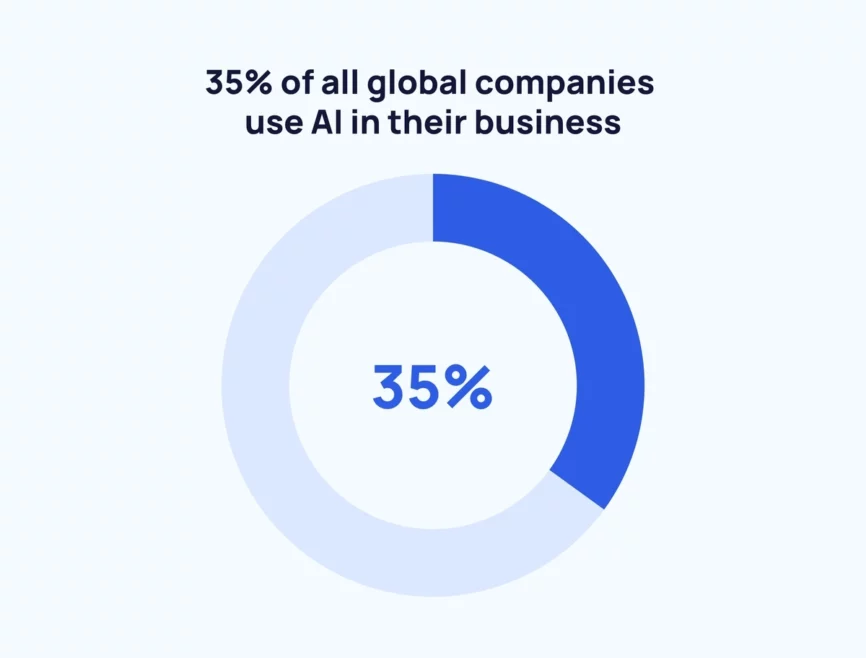
This is an indication that AI-driven innovation is increasingly one of the most influential reasons for outsourcing services. Businesses are taking advantage of AI technologies such as machine learning (ML), natural language processing, deep thinking, and computer vision to make processes more efficient and automate them.
30. Manufacturing owners outsource nearly 70%–80% of their final products.
Through this IT outsourcing strategy, businesses can reduce their overall production cost, access specialized facilities, and improve the speed of market launch. Notably, offshoring production processes has helped organizations maximize resource utilization, eliminate operational hazards, and increase focus on the business’s key functions like creativity and marketing.
31. In the US, small businesses with less than 50 employees outsource 29% of their work.
These IT outsourcing stats are suggestive of the fact that outsourcing gives flexibility to any type and size of business. Especially for small businesses that can scale their operations depending on the market demand and avoid the heavy burden of maintaining in-house capabilities. Such a strategic approach allows them to manage multiple operations with limited in-house resources to achieve business growth.
32. HR consulting is the most frequently outsourced among organizations.
Through teaming up with HR consultants, developing efficient HR management systems (HRMS), employee management software, etc., organizations streamline their workflows, optimize approaches, and have strategic advice to make their HR functions business-oriented.
33. Over 80–90% of large enterprises are expected to adopt RPA by 2026.
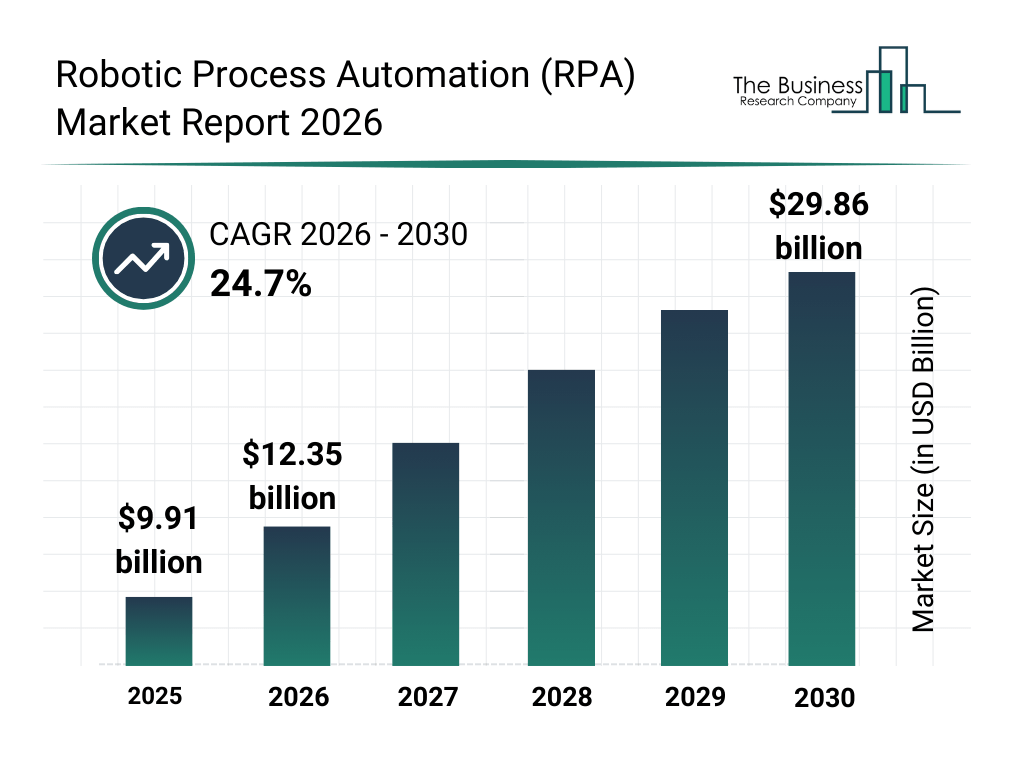
Robotic Process Automation (RPA) is widely used to automate repetitive tasks, improve workflow efficiency, and reduce human errors. It enables organizations to increase productivity, enhance accuracy, and allow teams to focus on higher-value, strategic activities.
34. In the UK, 34% of the organizations are outsourcing IT support.
This kind of outsourcing is a targeted initiative aimed at improving efficiency, scalability, and access to top-notch technological solutions in a competitive environment.
35. The two most outsourced tasks are writing (44%) and design (41%).
Content writing and designing are the main drivers of any marketing campaign, demanding a high level of expertise for guaranteed results. Through outsourcing, businesses can remove these tasks from their plates and pass them on to external experts. This makes the content creation process smoother, maintains the quality of the work, and enables the business to focus on core strategic initiatives that will help drive brand awareness and engagement.
36. The most common service outsourced is lead generation.
As a backbone of growth, sales and marketing departments outsource lead creation to get expert insights and cover a wider market audience for their business growth. This strategic approach underscores the evolving landscape of modern business practices, emphasizing efficiency and results-driven strategies.
IT Outsourcing Statistics – Geographical Distribution
The IT services global market majorly operates in two sets of regions, with one being the Asia-Pacific and Europe, while the other being North America, leading the world in growth rates and market shares. Let’s look at some of the interesting IT outsourcing stats based on geography.
37. The Philippines contributes 9% to its GPD through IT outsourcing and service.
The Philippines is now considered a competent country offering IT outsourcing services, becoming the backbone of its economy. Factors such as strategic position, English-speaking population, and business-friendly environment helped this country to be a favorite destination with outsourcing needs. In the Asia-Pacific region, the Philippines is the best affordable country for outsourcing today.
38. 59% of businesses globally are already outsourcing in India.
India is the leader in the IT outsourcing industry, as it provides about 59% of the total outsourcing services worldwide. India has become a sought-after location for outsourcing needs including IT services, customer support, and business process outsourcing (BPO). The country’s huge English-speaking, technical talent pool lures businesses looking for high-quality Software Outsourcing services in India at affordable prices.
Moreover, India’s conducive business environment, strong infrastructure, and supportive government policies make it a leading outsourcing destination. That’s why nowadays outsourcing to India is a most preferable option.
39. India’s IT outsourcing market is projected to exceed $150–180 billion by 2026, growing at a CAGR of ~7–8%.
India remains a global leader in IT outsourcing due to its highly skilled talent pool, strong digital infrastructure, and cost efficiency. The industry continues to expand with increasing demand for AI, cloud, and digital transformation, reinforcing India’s position as a top outsourcing destination.
40. China’s IT outsourcing market is expected to reach around $35–40 billion by 2026.
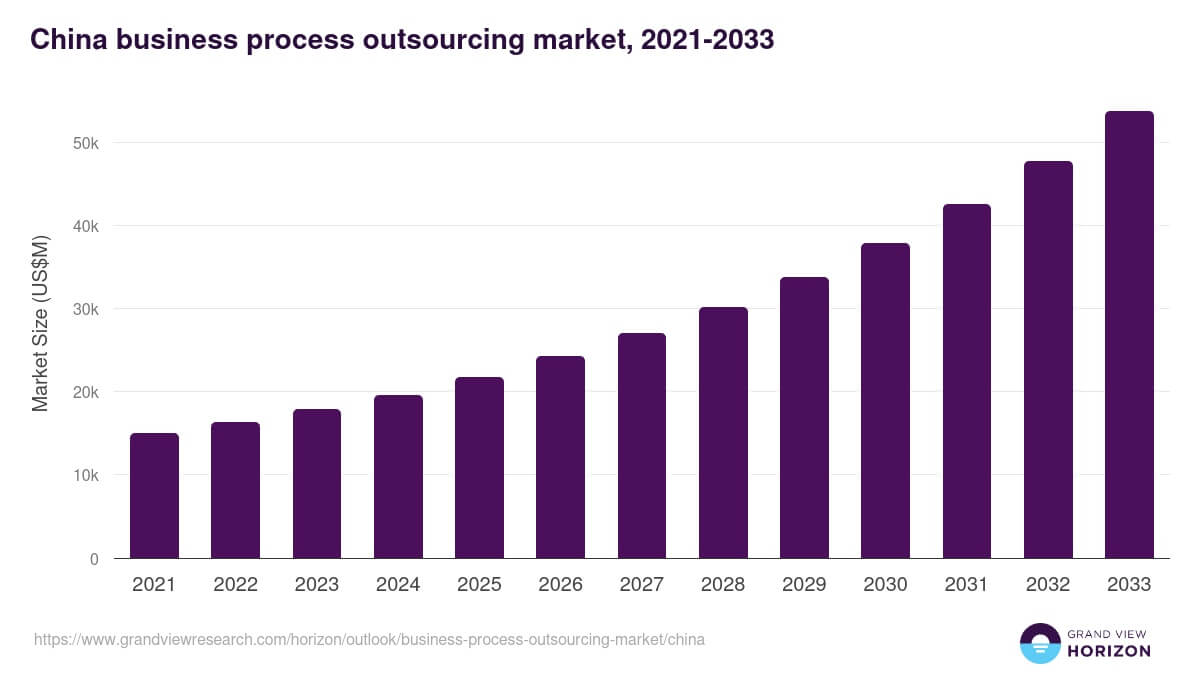
China’s outsourcing sector is growing steadily, supported by its advanced technology ecosystem, skilled workforce, and strong government initiatives. The country is increasingly focusing on high-tech services, AI development, and innovation-driven outsourcing, strengthening its role in the global IT services market.
41. The European BPO industry is estimated to reach a CAGR of 3.43% (2024-2028) with a value of US$119.00bn by 2028.
European regions have witnessed significant growth recently driven by customer preferences, emerging market trends, and several economic factors. Countries like the Netherlands, Ukraine, Romania, Belgium, France, and Germany, are popular for IT outsourcing, offering technological innovations at competitive pricing.
42. The top three states: California, Texas, and Florida, attract the highest offshore opportunities in the US.
These states boast strong economies, diversified industries, and an abundant pool of highly skilled workers. They are already home to the most advanced technology-oriented industries, financial services, and manufacturing industries, making them a hub for IT services, customer support, and back-office operations.
Outsourcing Statistics – Industry Specific
Here is the list of IT outsourcing stats across sectors and industries.
IT and Software Development Outsourcing
43. The global IT outsourcing market is expected to surpass $500 billion by 2026, growing at a CAGR of 8–10%, driven by AI, cloud, and automation to enable cost efficiency, scalability, and faster digital transformation.
The IT outsourcing sector is expected to be a key player with the highest revenue in the coming years. This surge underscores the increasing reliance of businesses on outsourcing for cost savings, access to specialized skills, and agility in adapting to technological advancements. As organizations navigate digital transformation and seek to optimize operations, IT outsourcing emerges as a strategic imperative, driving innovation and efficiency.
44. IT Services (54%), Finance (44%), and Payroll (32%) are the most popular services being outsourced.
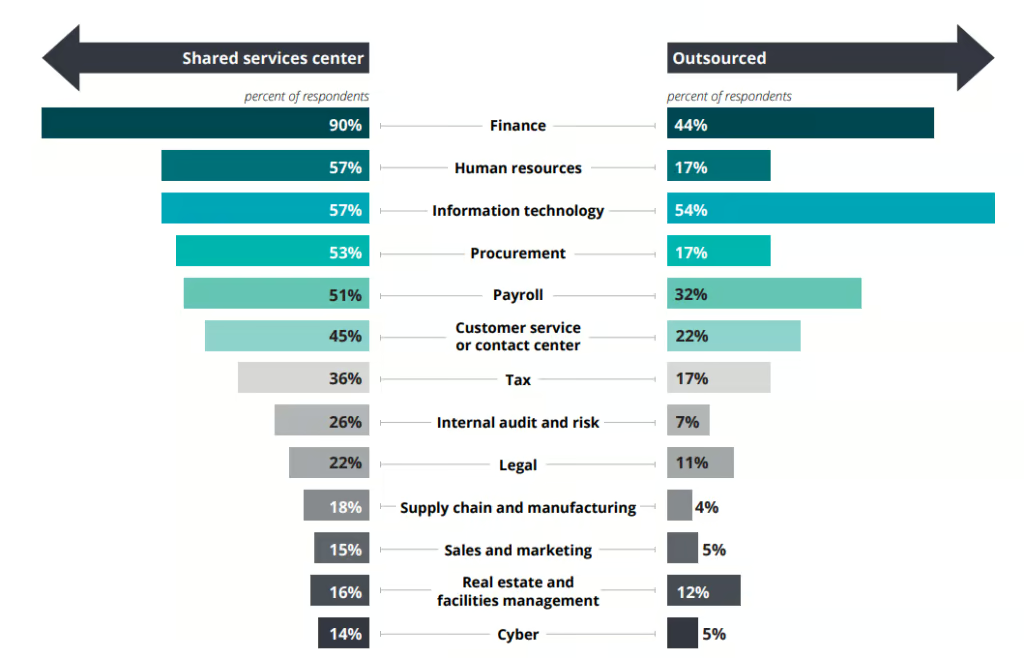
These IT outsourcing statistics of particular services are prime indicators of the popularity of this model, majorly after the pandemic. Models of Shared Services Centers (SSCs) and Global Business Services (GBS), which are flexible have demonstrated their ability to adapt to the changing geopolitical environment.
Also Read: Types of IT Outsourcing Models
Healthcare Outsourcing
45. Healthcare outsourcing market is projected to reach around $260 billion in 2026 and grow to over $400 billion by 2030.
These statistics highlight the growing importance of outsourcing in the healthcare segment. Outsourced healthcare services include various functions such as medical billing, coding, transcription, and telemedicine support. Outsourcing these activities will help healthcare providers to operate more efficiently, improve patient care, and concentrate on core medical functions, thus improving the overall healthcare services to patients.
Finance and Accounting Outsourcing
46. The most popular outsourced processes for small businesses are Accounting and IT services.
To optimize the operation of small businesses, outsourcing accounting and IT services is often a good practice. One of its main benefits is that companies can get expert advice to improve the efficiency of their operations as well as save money. Therefore, this approach enables SMEs to be competitive in today’s digital world, to adapt to the changing market conditions, and to increase their operations while maximizing productivity and profitability.
47. Businesses saved 60% on overhead by outsourcing their accounting and finance processes.
Some IT outsourcing statistics are quite impressive. Like many businesses, they admitted that they saved nearly 60% of their expenditure on overheads, infrastructure, and hiring of experts since they outsource their various finance and accounting processes.
Manufacturing and Production Outsourcing
48. There will be more than 6,600 outsourcing enterprises operating in China.
With a diverse range of IT outsourcing services, including IT, manufacturing, and customer support, China attracts businesses seeking to optimize operations and access global markets. It highlights the country’s commitment to promoting innovation, efficiency, and collaboration in driving economic development and competitiveness on a global scale.
49. 50% of the companies claimed to outsource their manufacturing and supply chain management.
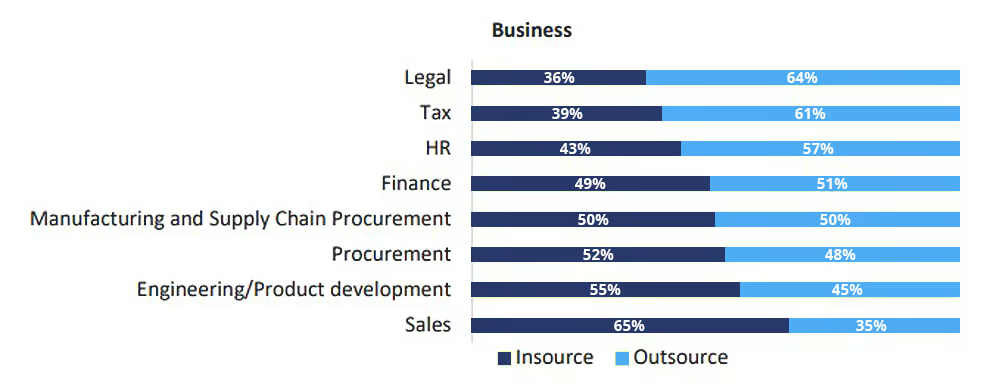
According to Deloitte’s Global Outsourcing Survey, outsourcing their manufacturing and supply chain management to IT experts has streamlined and fast-tracked their processes. This strategic involvement of technology allows companies to optimize costs, access specialized expertise, and increase flexibility in responding to market demands.
Customer service and call contact outsourcing
50. 89% of customers make a repeat purchase after a satisfactory consumer experience.
Companies that focus on delivering excellent service and meeting the needs of their customers opted to outsource their customer service customization and automation. Doing so, not only helped them keep their current customer base but also contributed to a business’ lasting success.
51. Japan’s BPO market is projected to reach around $40–45 billion by 2026 and exceed $55 billion by 2030.
Japan’s BPO sector continues to grow across services like customer support, finance, and HR, driven by automation and digital transformation. It plays a key role in improving business efficiency, productivity, and innovation in Japan’s evolving economy.
IT Outsourcing Statistics – Illuminating Bright Futures
52. The US freelance workforce is 75 million strong.
53. North and South America account for 42% of foreign outsourcing clients.
54. Global IT services market growth is estimated at 7–9% annually through 2026.
55. Over 300,000 US companies are engaged in outsourcing as of 2026.
56. Employee spending on IT outsourcing is projected to reach around $180B–$190B by 2026, driven by strong global demand and increasing adoption of digital transformation strategies.
57. The US is projected to be the largest revenue contributor in the IT service market, with a market volume of US$628.80 billion by 2028.
Unveiled Outsourcing Statistics – Top Services
Here, we will explore the top IT outsourcing stats of various tasks and learn more about the top outsourcing services.
58. The top outsourced processes are finance 51%, legal 64%, HR 57%, tax 61%, and manufacturing & supply chain 48%.
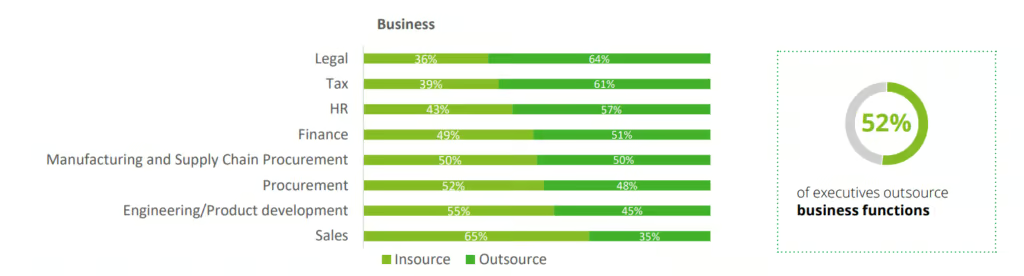
The above statistics reveal the prevalent outsourcing trends across various business functions. These figures underscore the strategic importance of outsourcing in optimizing operational efficiency while allowing businesses to focus on their core competencies to stay ready for futuristic demands.
59. Banners and digital ads (44%) are the leading type of creative production services offshored.
Outsourcing has become a strategic approach in the digital marketing landscape with creative production services being a primary focus. Banners and digital ads top the list of offshored creative production services, at a surprising 44%. This fact shows the industry’s capacity to deliver cost-efficient and tailored creative solutions that help companies improve their online presence and communicate with their target audience efficiently.
60. 81% of the executives reported outsourcing their cybersecurity needs.
A study by Deloitte showed that cyber threats are a top external challenge for organizations. 3 out of every 4 executives are reaching out to IT outsourcing service providers to establish their cybersecurity ecosystem.
61. 94% of organizations outsource to external IT service providers for critical development and deployment of technologies.
With the advent of technology, modern organizations are turning to leverage cloud, AI/ML, data and analytics, and automation for innovation and process streamlining. Among the other staggering IT outsourcing statistics, a stunning 74% of companies utilize IT outsourcing for data analytics.
62. 68% outsourced their help desk services.
The high number of outsourced helpdesk services highlights the industry’s capacity to offer specialized knowledge and effective solutions in such critical areas. It allows businesses to improve their security posture, ensure uninterrupted technology support, and utilize the expertise of well-trained professionals.
63. Another most outsourced service is Cold calling.
According to Shortlister’s report, cold calling has become one of the most outsourced services. The process is being outsourced to specialized providers by companies, allowing them to concentrate on their core business activities.
Also Read: Pros and Cons of IT Outsourcing
The Top IT Outsourcing Trends You Must Know
Let’s look at the latest trends shaping the IT outsourcing market.
Cloud computing adoption: This allows companies to be flexible without extra effort. The cloud implementation will grow more as the cloud technologies become even more stable and secure. By outsourcing their cloud computing, people can run their business from the internal server system to the external.
AI and automation integration: IT companies are working to make the processes as simple as possible, improve performance, and reduce costs through the application of AI and automation technologies.
Focus on cybersecurity: Utilizing an external IT security provider brings about a new level of security solutions which is required for effective risk management and data security. As cyber threats are continually on the rise, outsourcing cybersecurity has become the key factor for enterprises.
Multi-sourcing strategies: Many companies opt for multi-sourcing approaches which help reduce the risks and diversify their strategic options. This method gives companies broader skills, and resources set to deliver maximum value for their customers.
Shift towards outcome-based contracts: Conventional outsourcing contracts based on a specified number of units, are being replaced by outcome-based contracts that would be provided such as performance metrics. The change is very conducive since it sustains unity and also urges them to work jointly.
Rise of nearshore and onshore outsourcing: Offshore outsourcing, is a popular way of restructuring costs. It has a tendency towards the development of nearshore and onshore outsourcing. Such models have multiple advantages, such as a better geographical location, cultural matching, and communication easiness.
Agile and DevOps adoption: Agile operation and DevOps philosophy have gained just as much popularity among IT outsourcing projects. These permit software delivery to develop faster, software to be released more frequently, and after the adjusting requirements to respond immediately. This results in the successful outcome of the project.
Also Read: DevOps Statistics You Should Know
Hyper-personalized customer experience: Customer experience is becoming a critical factor of business differentiation. The wide range of the solutions includes here such as building up the user interface for the tools and technologies, Hence it implies reaching out to the users and providing personalized solutions.
Sustainability and corporate social responsibility (CSR): Companies are paying more attention to CSR activities. IT outsourcing vendors are adopting sustainable practices, such as the use of green data, cutting carbon emissions, and developing initiatives that have a positive impact on the local communities.
Managed services and beyond: IT outsourcing statistics indicate that we are moving from the traditional models to the managed services model. Here the providers, rather than being just in service, become a crucial part of managing and optimizing clients’ IT surroundings. This is the point where companies can, focus on critical competencies with the support of knowledgeable firms to stimulate innovation leading to variation.
Frequently Asked Questions
Nearshoring is growing as over 50% of US companies prefer it for better collaboration. Shared time zones can reduce communication delays by 20–30%, improving project speed and efficiency compared to offshore models.
IT outsourcing gives companies access to 24/7 monitoring, advanced threat intelligence, and compliance expertise, helping strengthen data protection while reducing security costs by up to 30%.
Providers integrate AI to automate repetitive development and testing tasks, improving accuracy and speed. This allows outsourced teams to focus on complex software architecture, high priority business logic and advanced application development.
Outsourcing cloud operations ensures infrastructure is optimized for performance, security and cost efficiency. External partners handle migration, monitoring and maintenance, allowing internal IT staff to focus on proprietary applications and strategic technology initiatives.
IT outsourcing shifts expenses from fixed costs to predictable, service-based spending, helping companies reduce operational costs by up to 25–30%. It improves budget control, minimizes redundancy, and allows resources to be focused on strategic growth and digital transformation.