

Finding the right people has become a major challenge for enterprises. Growing demand for specialized skills, limited talent pools, and lengthy hiring processes are making it harder for companies to keep projects on track and maintain fully staffed teams.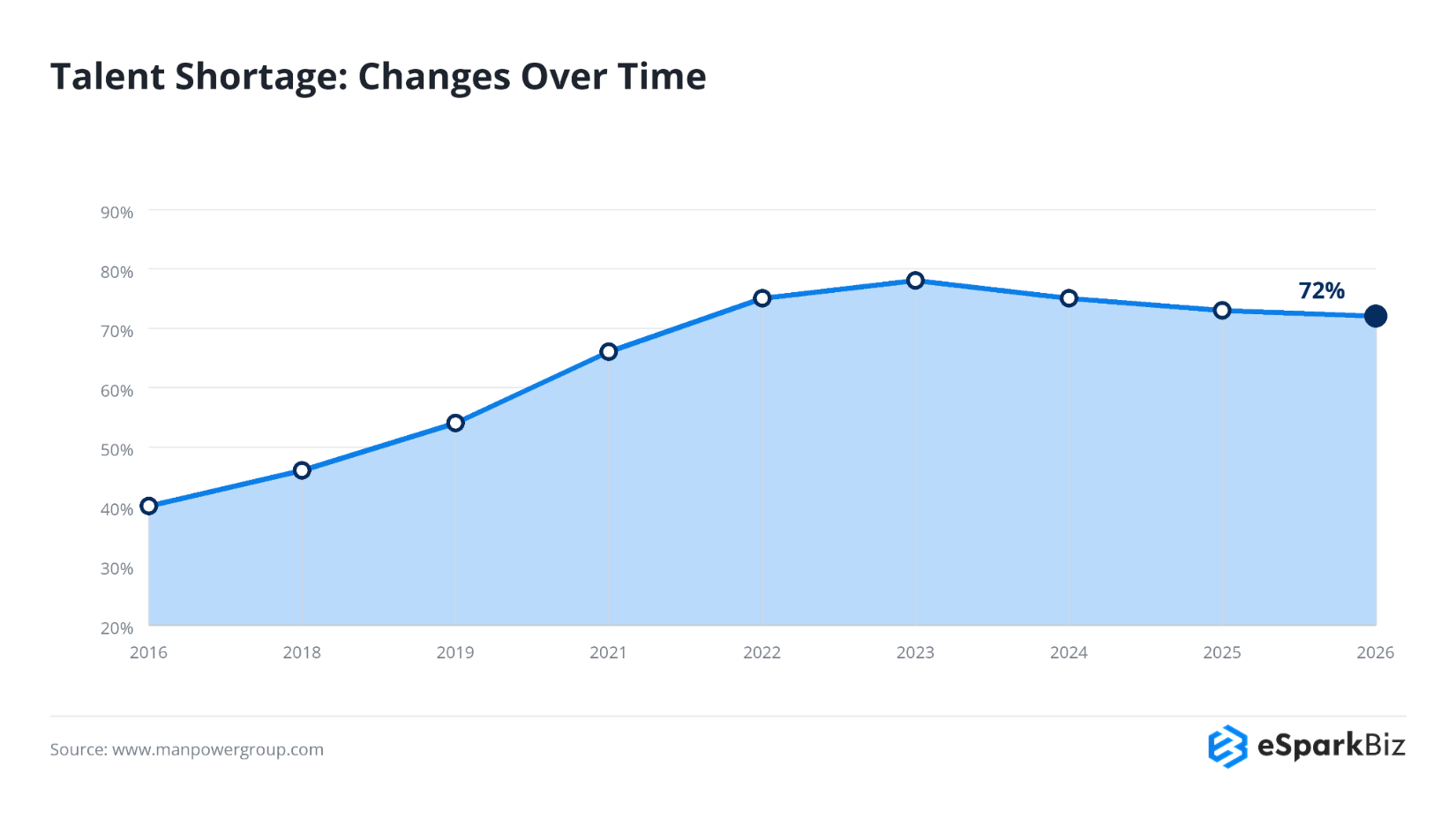
The scale of the problem is significant. 72% of employers globally reported difficulty filling roles in 2026, highlighting how finding qualified professionals has become a widespread hiring challenge rather than a temporary gap.
This pressure is affecting how companies plan budgets, structure teams, and compete for technical professionals across regions and industries. As these workforce constraints continue, businesses are considering different ways to manage their talent needs.
Staff Augmentation & IT Staffing Market
Businesses are turning to flexible talent models to close skills gaps faster and stay competitive as market demands shift beyond what traditional hiring processes can easily support.
1. The global IT staff augmentation service market is projected to reach USD 857.2 billion by 2032, growing at a 13.2% CAGR from 2026 to 2032.
2. The global IT staffing market is expected to reach USD 127.75 billion in 2026 and is forecast to reach USD 152.47 billion by 2031, growing at a 3.61% CAGR from 2026 to 2031.
3. India’s IT staffing industry grew 16% year over year in Q2 2026.
4. The global contract and temporary staffing market is projected to grow from USD 512.32 billion in 2026 to USD 888.02 billion by 2035 at a 6.7% CAGR.
5. Offshore staff augmentation accounted for more than 52% of IT staff augmentation market revenue in 2026.
6. Cloud-based deployment accounted for more than 68% of the IT staff augmentation market in 2026.
7. The U.S. IT staffing market is projected to reach USD 44.50 billion by 2031.
Staff Augmentation Adoption & Workforce Demand
External talent helps businesses access hard-to-find skills and strengthen teams quickly, without the cost or delay of expanding permanent headcount, especially as workforce needs shift fast.
Contract & Contingent Worker Adoption
8. 80% of HR professionals reported interacting with third-party labor arrangements in some capacity.
9. 44% of HR professionals reported that their organizations use temporary staffing agency workers.
10. 44% of HR professionals reported that their organizations use project-based contractors or vendors.
Demand for Staff Augmentation
11. Nearly 62% of enterprises adopt staff augmentation to manage dynamic workloads.
12. Around 58% of organizations prioritize staff augmentation for rapid access to specialized skills.
13. Approximately 54% of organizations report improved operational efficiency through augmented IT teams.
Shift Toward Flexible Workforce Models
14. 95% of surveyed organizations engaged gig workers, while 55% kept gig talent below 10% of their overall workforce.
15. India’s gig workforce reached 12 million workers, a 55% increase, and is projected to account for 6.7% of the workforce by FY30.
16. 65% of global company leaders plan to expand their use of contingent workers within two years.
17. 83% of U.S. companies are willing to use contingent workers to meet business needs in 2026.
Talent Shortage & Skill Gaps
Finding the right skills is getting harder as technology changes quickly, pushing companies to build new capabilities, rethink hiring approaches, and adopt more flexible workforce strategies overall.
Global Talent Shortage & Skills Demand
18. AI model and application development (20%) and AI literacy (19%) are the hardest-to-find technical skills globally, highlighting the growing demand for AI capabilities.
19. 63% of employers identify skill gaps as a major barrier to business transformation through 2030.
20. AI and big data, networks and cybersecurity, and technology literacy are among the fastest-growing skills through 2030.
21. 39% of employers rank communication, collaboration and teamwork as the most sought-after human skills globally in 2026.
22. LinkedIn projects that 70% of the skills used in most jobs will change by 2030, with AI acting as a major catalyst for this shift.
Recruiter Challenges & Talent Gaps
23. 66% of recruiters say it has become harder to find qualified talent over the last year.
24. 42% of recruiters face growing pressure to fill roles faster.
25. 39% of recruiters face growing pressure to identify qualified candidates beyond conventional talent pools.
26. 59 out of every 100 workers are expected to need reskilling or upskilling by 2030.
Staff Augmentation Costs & Business Value
Pricing depends on location, team size, and project scope, while the business value comes from balancing talent access, delivery speed, and overall workforce costs effectively.
Hourly Rates & Project Costs
27. IT staff augmentation companies typically charge $25–$49 per hour in 2026.
28. IT staff augmentation projects reviewed on Clutch typically cost $50,000–$199,999, depending on project scope, duration, team size, and expertise.
29. In 2026, IT staff augmentation rates range from below $25 per hour in the Philippines to $100–$149 per hour in Canada, while India, the U.S., Ukraine, Spain, Mexico, and Australia range from $25–$49 per hour.
ROI & Cost Savings from Outsourcing
30. 25% of executives reported reductions in vendor service costs or improvements in service quality through AI-powered outsourcing.
31. 80% of executives planned to maintain or increase their investment in third-party outsourcing.
32. 55% of organizations with a Global GBS leader role achieved more than 20% average savings from their GBS operations.
Traditional Hiring Costs & Benchmarks
Hiring permanent employees involves more than salary alone. Recruitment costs, time spent filling open roles, employee benefits, and turnover can all add to the overall cost of building and maintaining an in-house team.
33. The median cost per hire was $1,200 for nonexecutive roles and $10,625 for executive roles in 2025. 34. The median time-to-fill was 44 days for nonexecutive positions and 45 days for executive positions in 2025.
35. Private-sector employers spent an average of $46.60 per hour on total employee compensation in March 2026, including $32.60 in wages and $14.01 in benefits, which accounted for 30.1% of total compensation costs.
36. Employers spent an average of $78.10 per hour in total compensation for management, professional, and related occupations in March 2026, including $24.61 in benefits.
37. Employee turnover costs an estimated 33% of base wages, meaning replacing an employee earning $50,000 can cost at least $16,500.
Hiring Speed & Productivity Statistics
Hiring speed can affect project timelines, workload, and the ability to fill important roles when they are needed. Faster recruitment and more efficient staffing processes can help businesses reduce delays and make better use of recruiting resources.
Hiring Speed Benchmarks
38. The global median time to hire is 38 days, based on 89 million applications for 1.5 million jobs across 95 countries.
39. Companies using AI in their recruiting processes hire 26% faster, saving approximately 11 days compared with companies without AI support.
Recruitment Productivity Benchmarks
40. Staffing firms that integrate AI across sourcing, screening, outreach, and scheduling report 30%–35% reductions in recruiter time per hire.
41. Staffing firms integrating AI across their recruiting workflows report 3× productivity gains through virtual recruiting tools.
IT Skills & Talent Demand
Demand for technology talent is growing across several specialized areas, with employers seeking skills in AI, data, infrastructure, and cybersecurity. Job growth and changing skill requirements are also influencing which technical capabilities businesses prioritize when hiring.
Job Posting Volume by Skill Area
42. Tech occupation employment is projected to grow 2.2% in 2026, adding approximately 128,074 jobs compared with 2025.
43. Employers posted 1,229,505 jobs requiring AI skills between January 2025 and January 2026, highlighting strong demand for AI-capable talent across the labor market.
44. Employer job postings requiring data and analytics skills reached 5,032,662, while postings requiring infrastructure and support skills reached 5,552,421 between January 2025 and January 2026.
AI Skills Growth & Wage Premium
45. Jobs requiring specific AI skills grew by 69%, nearly eight times faster than the overall jobs market, which grew 9%.
46. The average wage premium for workers with AI skills reached 62% in 2026, up from 57% the previous year.
Fastest-Growing IT Skills
47. Cybersecurity ranked No. 1, while AI Development, Prompt Engineering, and Large Language Model (LLM) skills also ranked among LinkedIn’s 10 fastest-growing IT skills for 2026. The ranking is based on year-over-year growth in skill acquisition and hiring success.
48. 36% of organizations with at least one cybersecurity skills need cited cloud computing security as a skills need, making it the second-most cited need globally after AI (41%). Demand for cloud security skills increased 6% from 2024.
AI Talent Demand & Workforce Trends
Artificial intelligence adoption is pushing organizations to hire specialized roles, expand team capacity, and upskill employees faster than traditional workforce planning cycles typically allow.
AI Talent Acquisition & Workforce Skills
49. 36% of organizations are assessing target talent acquisition levels and hiring specialized talent to drive AI initiatives.
50. 48% of organizations are designing and implementing AI upskilling and reskilling strategies to address workforce capability gaps.
51. 53% of organizations are educating their broader workforce to raise overall AI fluency.
AI Workforce Planning & Capacity
52. 78% of leaders plan to hire for new AI roles, including AI trainers, data specialists, security specialists, AI agent specialists, ROI analysts, and AI strategists.
53. 45% of leaders say expanding team capacity with digital labor is a top priority over the next 12–18 months, while 47% say upskilling their workforce is a top priority.
54. 51% of managers expect AI training or upskilling to become a key responsibility for their teams within the next five years.
Global, Remote & Flexible Workforce Statistics
Global hiring is expanding beyond local markets, while remote, freelance, and cross-border work give organizations greater access to specialized talent. These trends are reshaping how businesses build and scale distributed teams.
Cross-Border Hiring Trends
55. 28% of cross-border hires at top-funded startups were software developers in 2025, making software development the leading cross-border role among these high-growth companies.
56. Startups that raised $100 million+ hired more than 1,400 cross-border employees in 2025, showing the scale of international talent acquisition among high-growth companies.
57. General AI trainer roles grew 283% in cross-border hiring in 2025, with the occupation expanding to more than 70,000 workers across 600+ organizations globally.
Remote & Flexible Work
58. Among U.S. employees in remote-capable jobs, 52% work in hybrid arrangements, 26% work exclusively remotely, and 22% work on-site.
59. 61.0% of U.S. workers surveyed said freelance or project-based work was appealing, while 41.0% were currently working or had previously worked on a freelance or project basis.
60. 55.9% of freelancers expected to do more project-based work in 2026, indicating continued interest in flexible work arrangements.
61. 71.3% of workers said remote work options made freelancing appealing, while 73.2% cited flexibility and the ability to set their own hours.
Cross-Border Digital Work
62. 53% of surveyed web-based digital platform workers reported that their clients were located in another country, showing the prevalence of cross-border digital work.
63. Among respondents who knew their clients’ locations, 90% worked with clients outside Latin America, highlighting the international reach of web-based digital work.
Staff Augmentation Risks & Challenges
External hiring can introduce challenges related to candidate quality, security, and third-party risks. Strong screening, clear processes, and proper oversight help reduce these concerns and support more reliable staffing outcomes.
Candidate Quality & Screening Risks
64. Approximately 40% of sourced candidates pass technical verification and fraud screening, highlighting the risk of unqualified or fraudulent candidates entering staffing pipelines.
Third-Party & Vendor Security Risks
65. Third-party involvement in breaches increased 60% from the previous year, accounting for 48% of all breaches.
66. 70% of cybersecurity professionals reported that their organizations are highly or extremely concerned about cybersecurity risks in their supply chains.
67. 28% of organizations reported experiencing a cybersecurity incident originating from a third-party vendor or supplier during the previous two years.
Frequently Asked Questions
What is staff augmentation?
Staff augmentation is a workforce model where skilled external professionals join an in-house team for a defined period, helping close capability gaps without the long-term commitment of permanent hiring.
How is staff augmentation different from outsourcing?
Outsourcing typically transfers responsibility for a project or function to an external provider, while staff augmentation adds skilled professionals to your existing team, allowing you to retain control over priorities and delivery.
- You retain ownership of process and priorities
- Talent works within your existing systems and workflows
- Delivery accountability stays with your internal team
Is staff augmentation more cost-effective than full-time hiring?
In many cases, it can be. Staff augmentation can reduce recruitment, and ongoing payroll costs, allowing businesses to pay for the expertise they need for the required period.
|
Cost factor |
Full-time hire |
Staff augmentation |
|
Recruitment |
High |
Minimal |
|
Benefits/payroll |
Ongoing |
None |
|
Training investment |
Required |
Not needed |
How quickly can augmented talent be onboarded?
Companies can often onboard augmented talent faster than permanent employees because providers maintain talent networks and established screening processes. Actual timelines depend on the required skills, interview process, and project complexity.
When should a company choose staff augmentation?
Staff augmentation is well suited to situations where specialized skills or additional capacity are needed quickly without the long-term cost and commitment of increasing permanent headcount.
|
Scenario |
Why it fits |
|
Short-term project surge |
Adds capacity fast |
|
Niche skill gap |
Brings expertise without a full hire |
|
Tight deadline |
Faster than traditional recruitment |
|
Uncertain project scope |
Keeps workforce flexible |
What are the main benefits of staff augmentation?
Staff augmentation provides access to additional capacity and specialized skills without requiring a permanent increase in payroll, helping teams maintain delivery timelines when talent gaps affect projects or growth plans.
- Faster ramp-up than traditional hiring cycles
- On-demand access to niche, hard-to-find expertise
- Scalable team size aligned to project needs
- Reduced overhead vs. full-time employment costs
What are the risks of staff augmentation?
Like any workforce model, staff augmentation can create risks when not managed properly. These may include limited team alignment, knowledge gaps when external professionals leave, and potential data security concerns.
How does staff augmentation help companies address talent shortages?
When specialized skills are difficult to source internally, staff augmentation gives companies access to a broader talent pool and helps close capability gaps without waiting through lengthy hiring cycles.
- Gives access to skilled talent beyond local hiring limits
- Fills niche skill gaps quickly
- Reduces pressure on internal recruitment teams
- Keeps critical projects moving without delay
What factors affect staff augmentation costs?
Staff augmentation costs vary based on the required skill level, engagement duration, talent location, and urgency of the requirement.
|
Cost driver |
Impact on price |
|
Skill level |
Higher expertise, higher rate |
|
Engagement length |
Longer term, better rates |
|
Location |
Regional rates vary |
|
Urgency |
Faster onboarding, higher cost |
How should companies choose the right staff augmentation partner?
The right partner should be evaluated on more than cost. Companies should consider the provider's delivery track record, talent screening process, communication practices, and ability to scale or adjust the engagement as business needs change.



 August 17, 2026